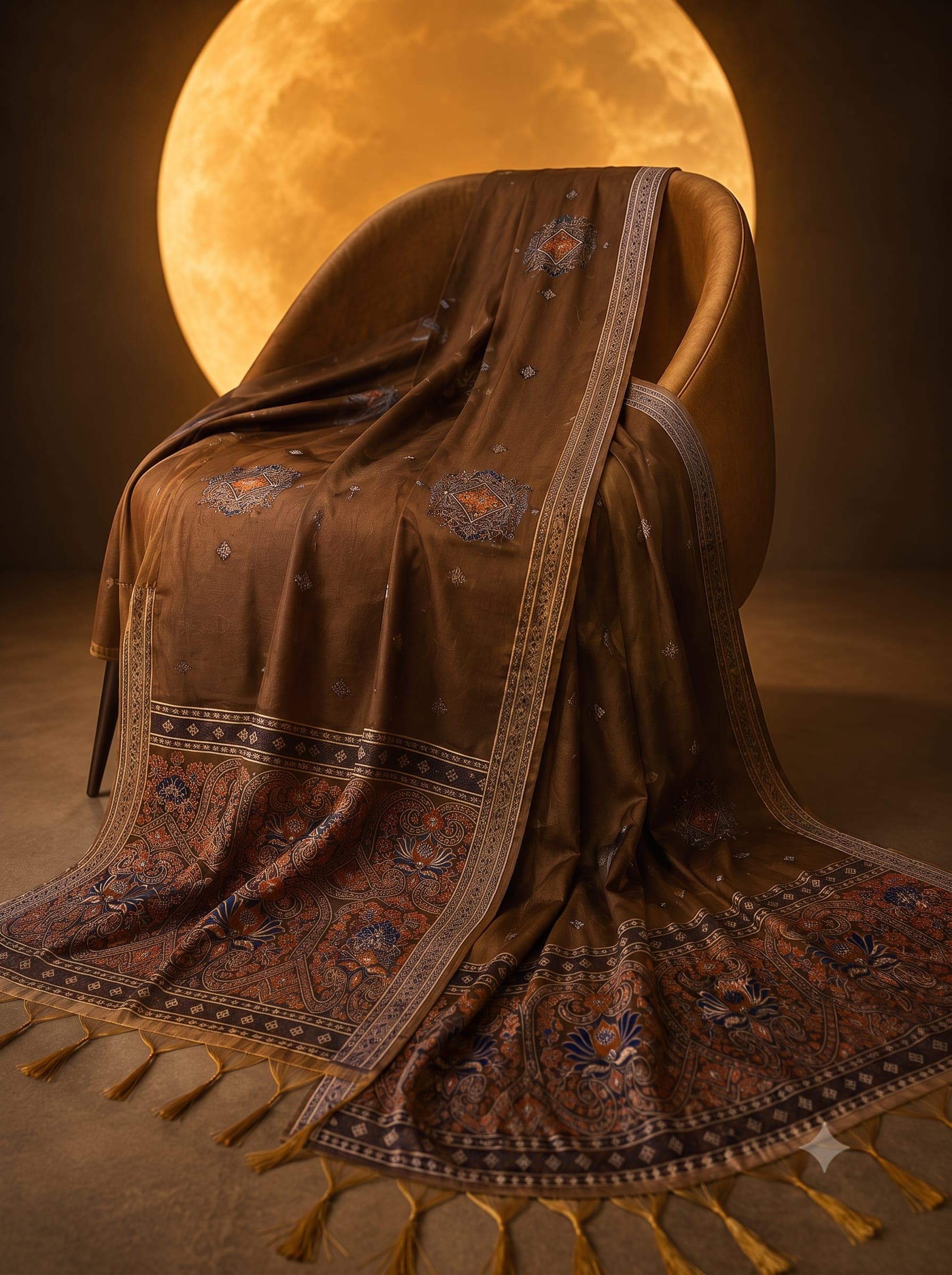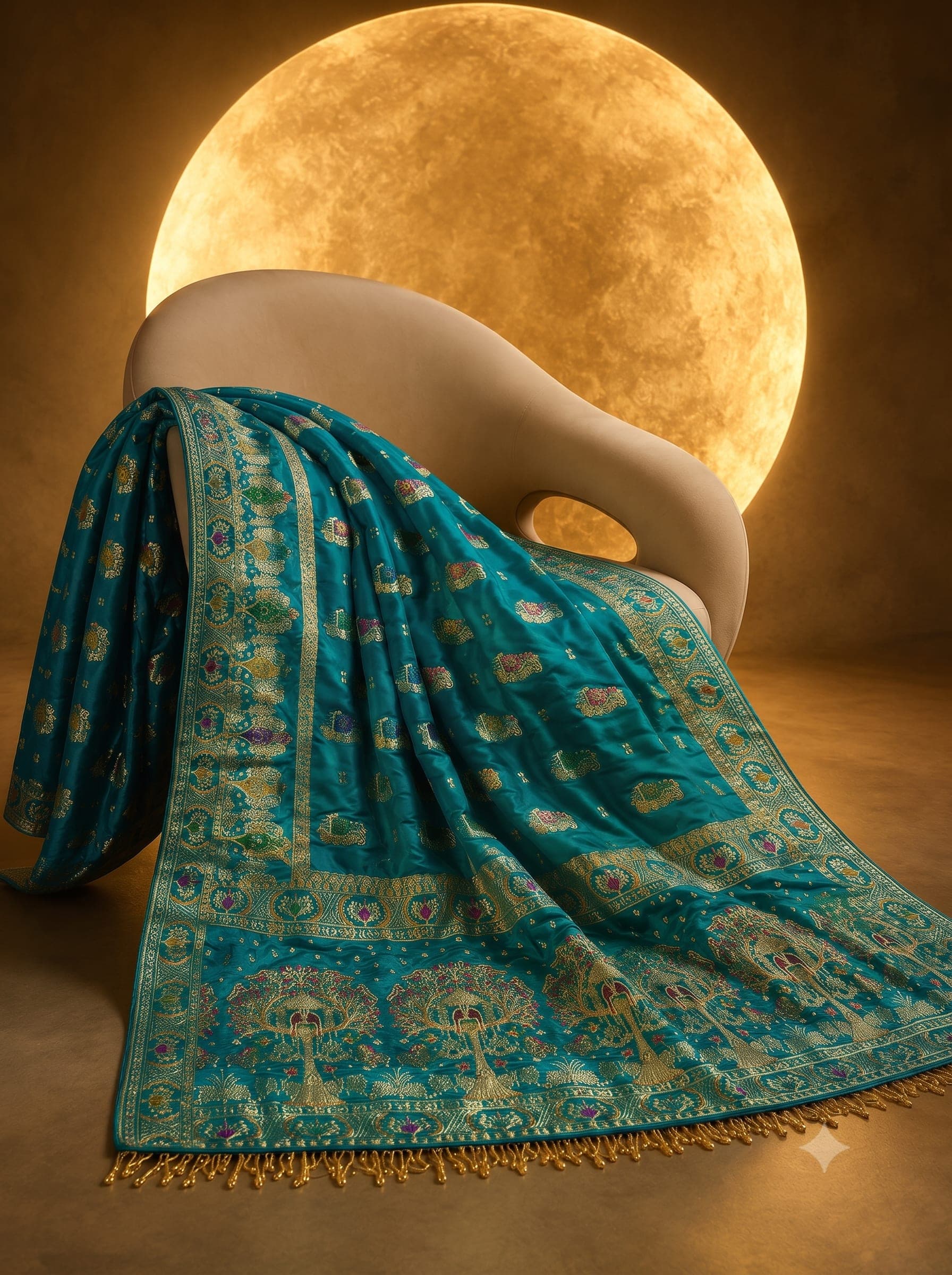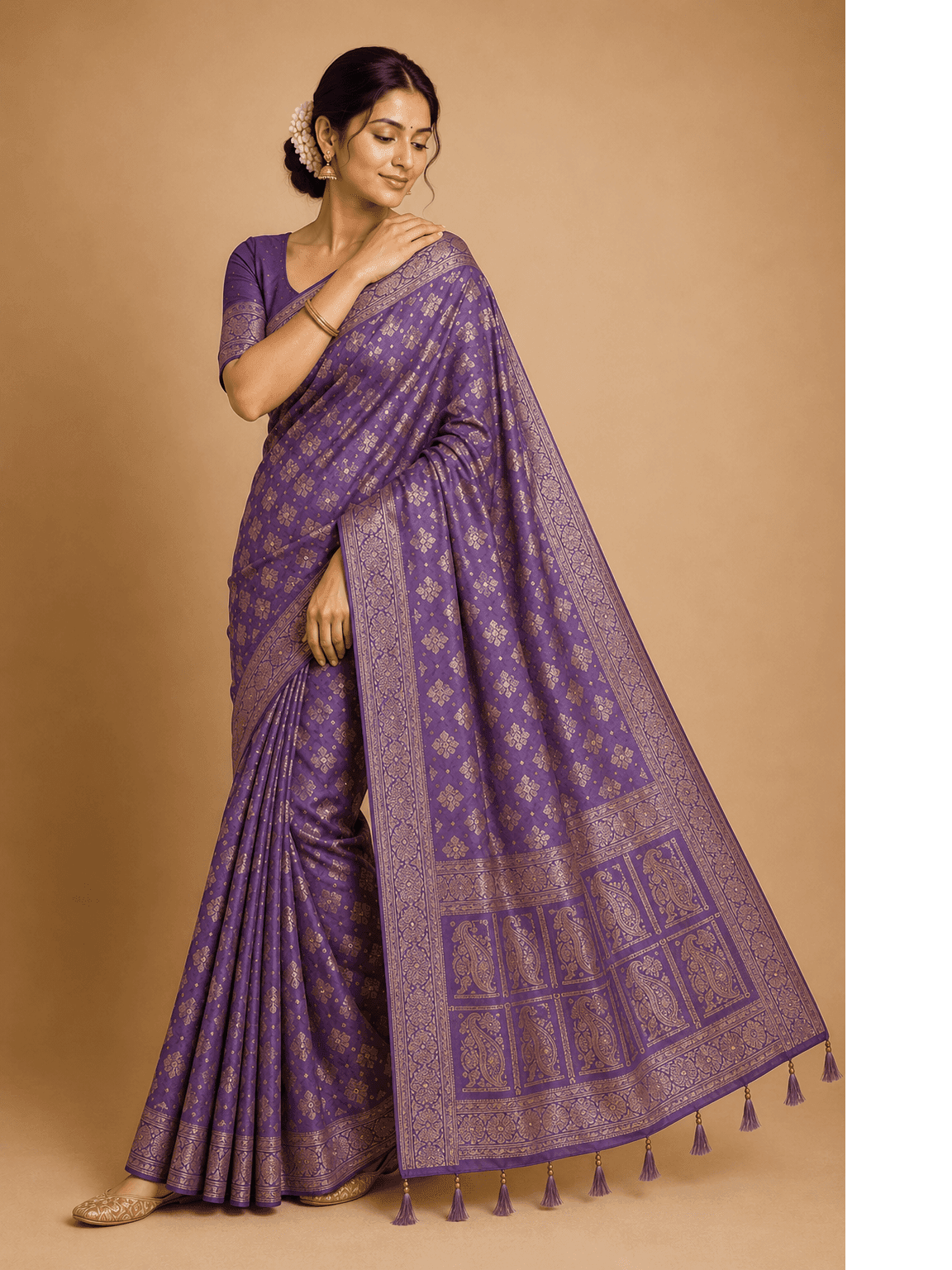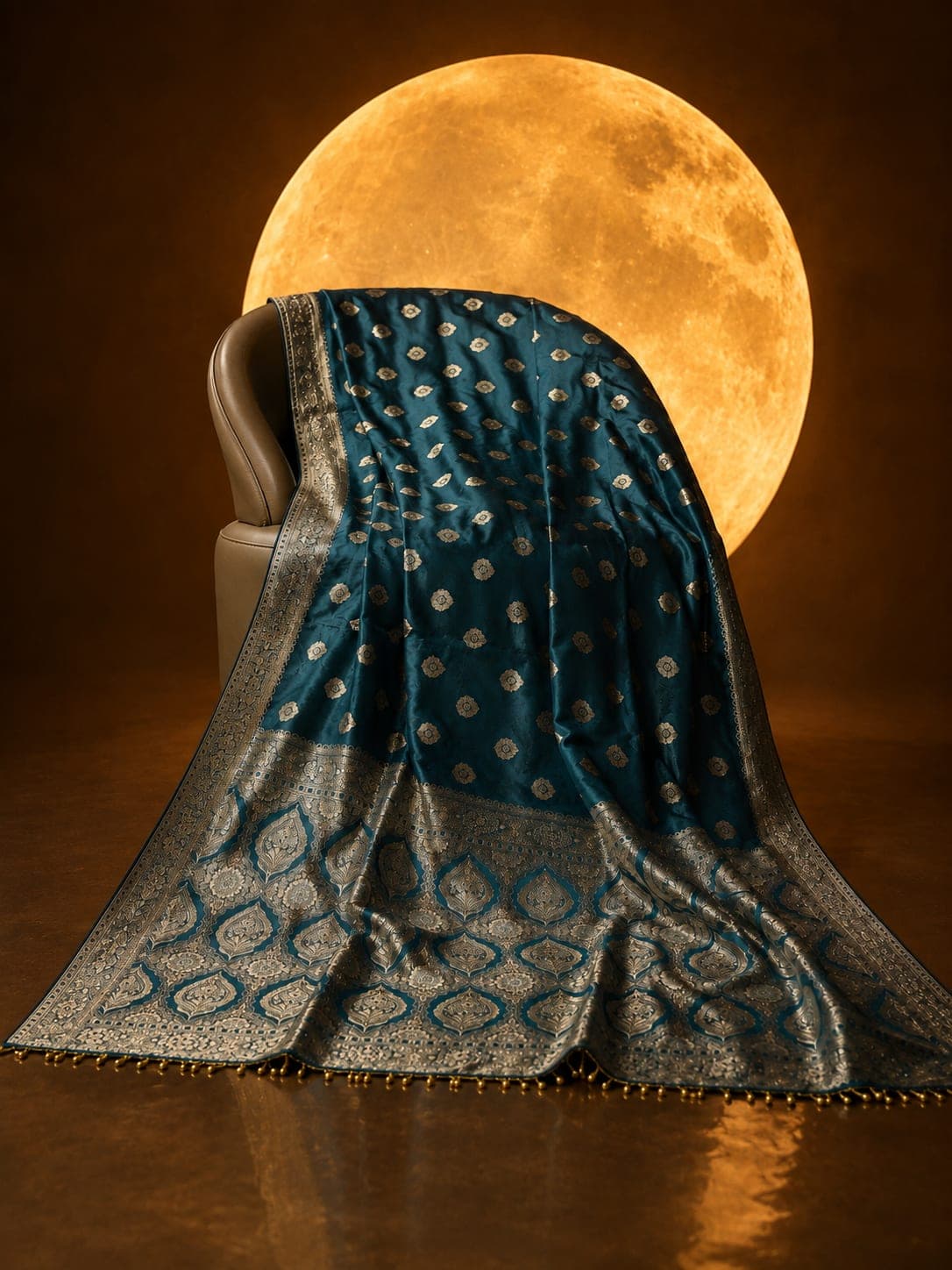

Banarasi sarees are universally recognized as one of the finest traditional Indian textiles, woven in the ancient city of Varanasi (Banaras). Characterized by their opulent zari work (metallic threads), intricate brocades, and fine silk, these sarees are considered essential bridal wear and heirloom pieces.
The History of Banarasi Weaving
The art of weaving in Banaras dates back centuries, finding mention in texts as old as the Mahabharata. However, the luxurious brocade work we recognize today flourished during the Mughal era. Persian weavers brought complex floral motifs, interlocking patterns, and the technique of weaving with real gold and silver threads, which blended seamlessly with traditional Indian aesthetics.
Key Identifying Features
Authentic Banarasi sarees are known for several distinguishing characteristics:
1. **Heavy Zari Work:** The extensive use of gold and silver metallic threads (zari) creates a rich, raised texture. 2. **Mughal-Inspired Motifs:** Common designs include the 'Kalga' and 'Bel' (floral motifs), 'Jhallar' (upright leaves along the border), and intricate lattice (jaal) patterns. 3. **Mina Work:** This involves weaving colorful silk threads within the zari motifs, resembling enamel jewelry.
Types of Banarasi Sarees
There are four main fabric varieties of Banarasi sarees:
- **Katan (Pure Silk):** Woven with twisted pure silk threads, creating a sturdy yet incredibly soft fabric. - **Shattir:** Primarily used for creating contemporary and exclusive designs under the Banarasi umbrella. - **Organza (Kora) with Zari and Silk:** Characterized by its sheer texture and rich brocade work. - **Georgette:** A lightweight, finely woven fabric with a crinkled texture, offering exceptional drape.