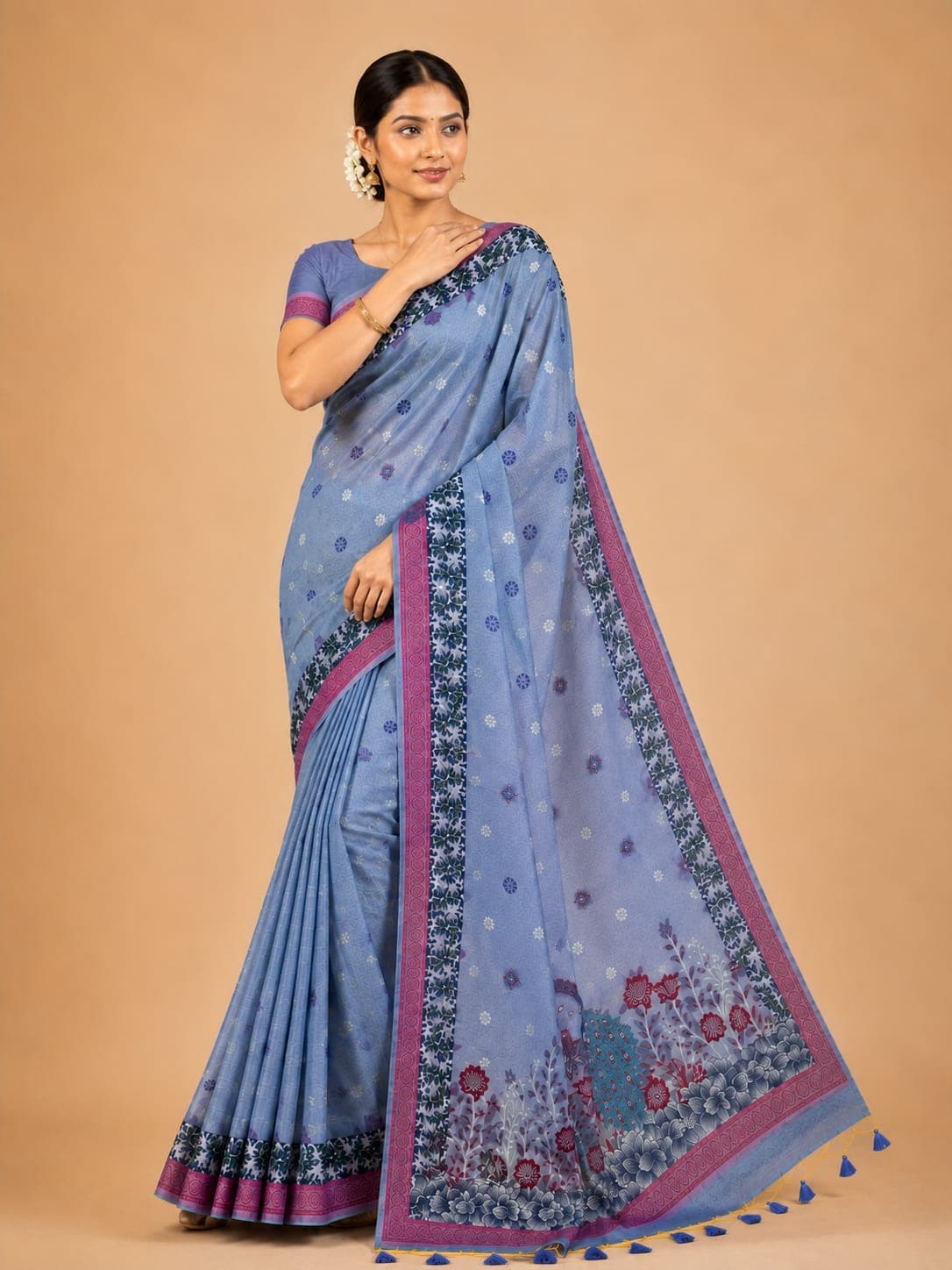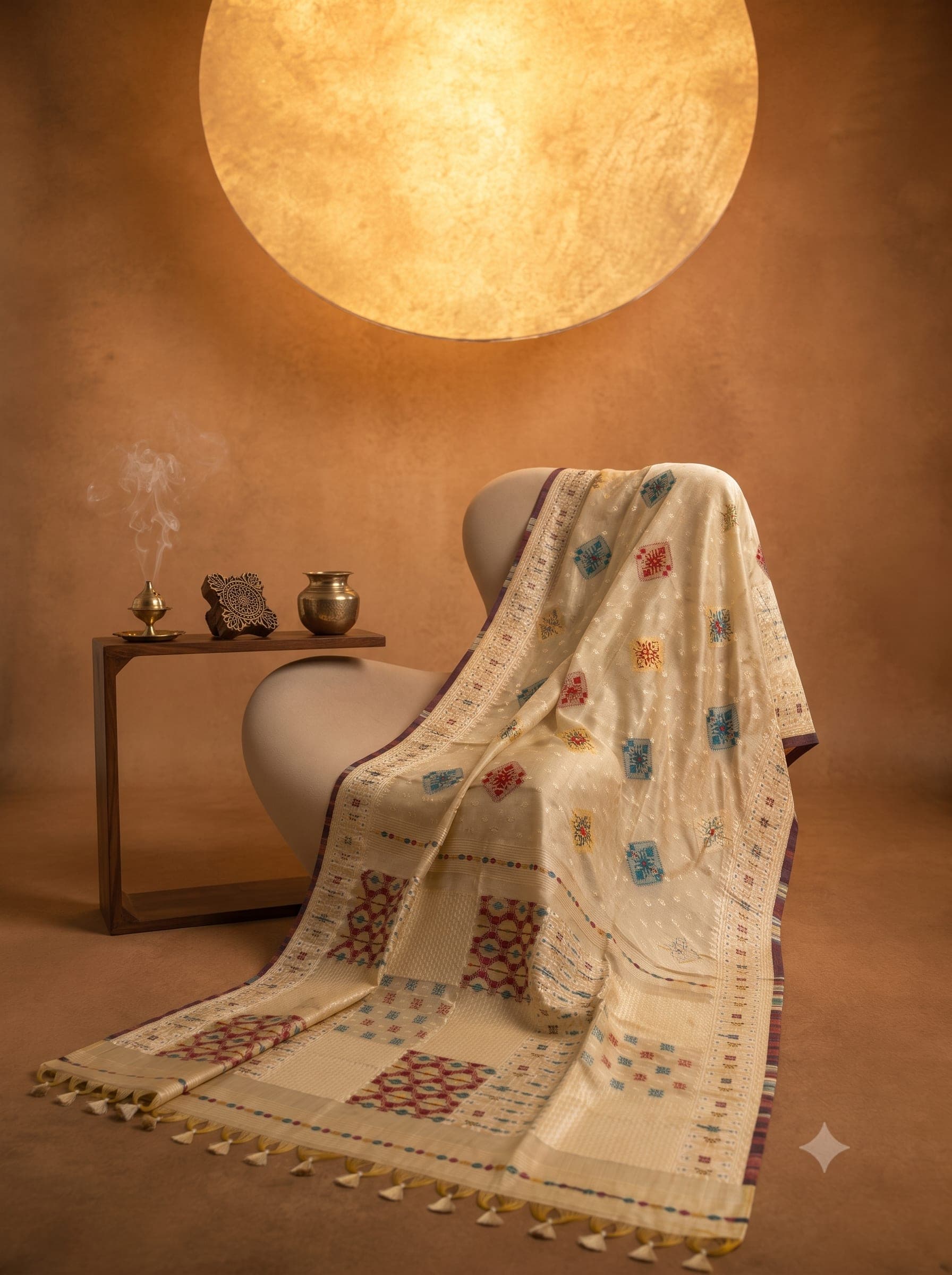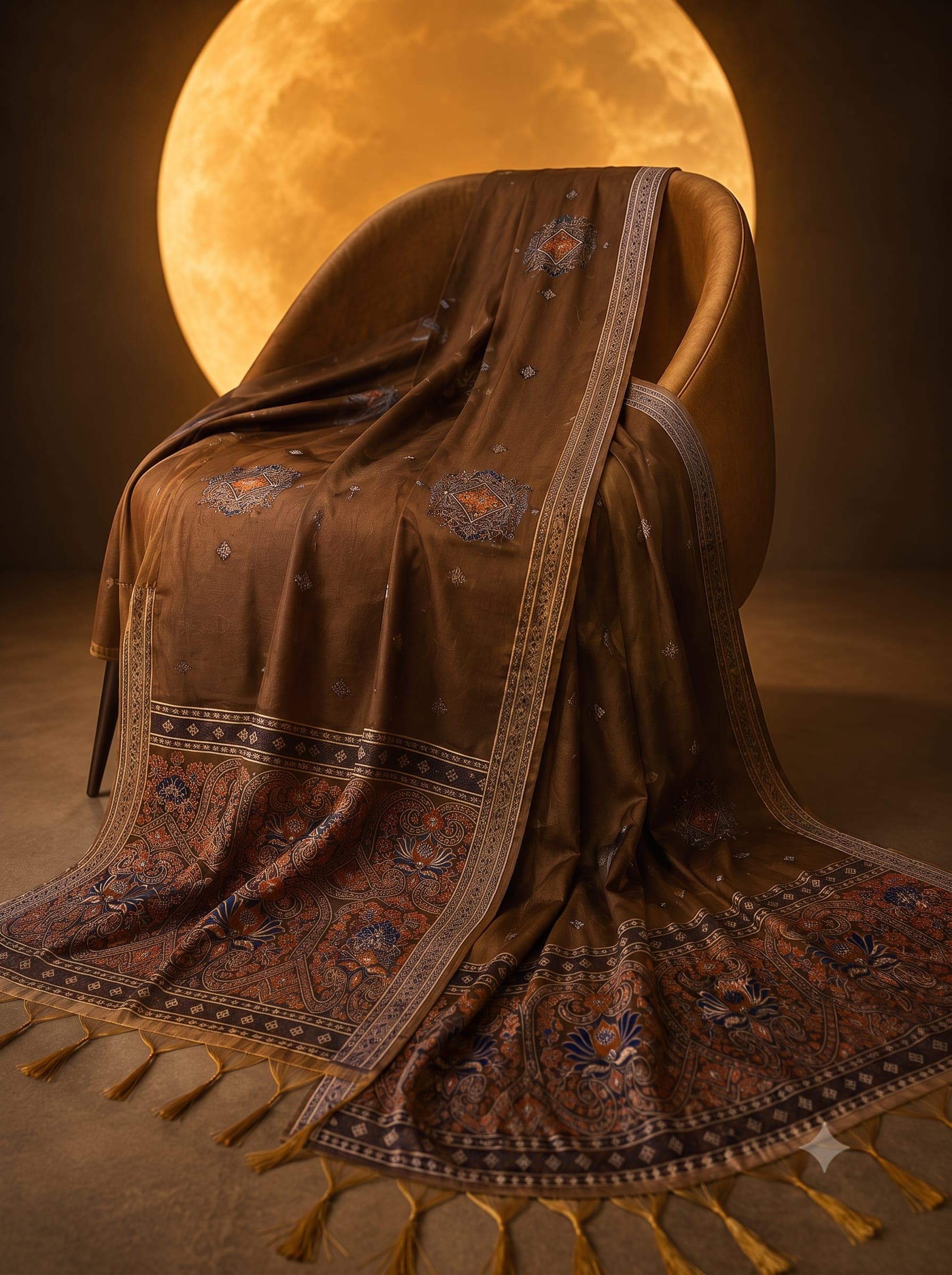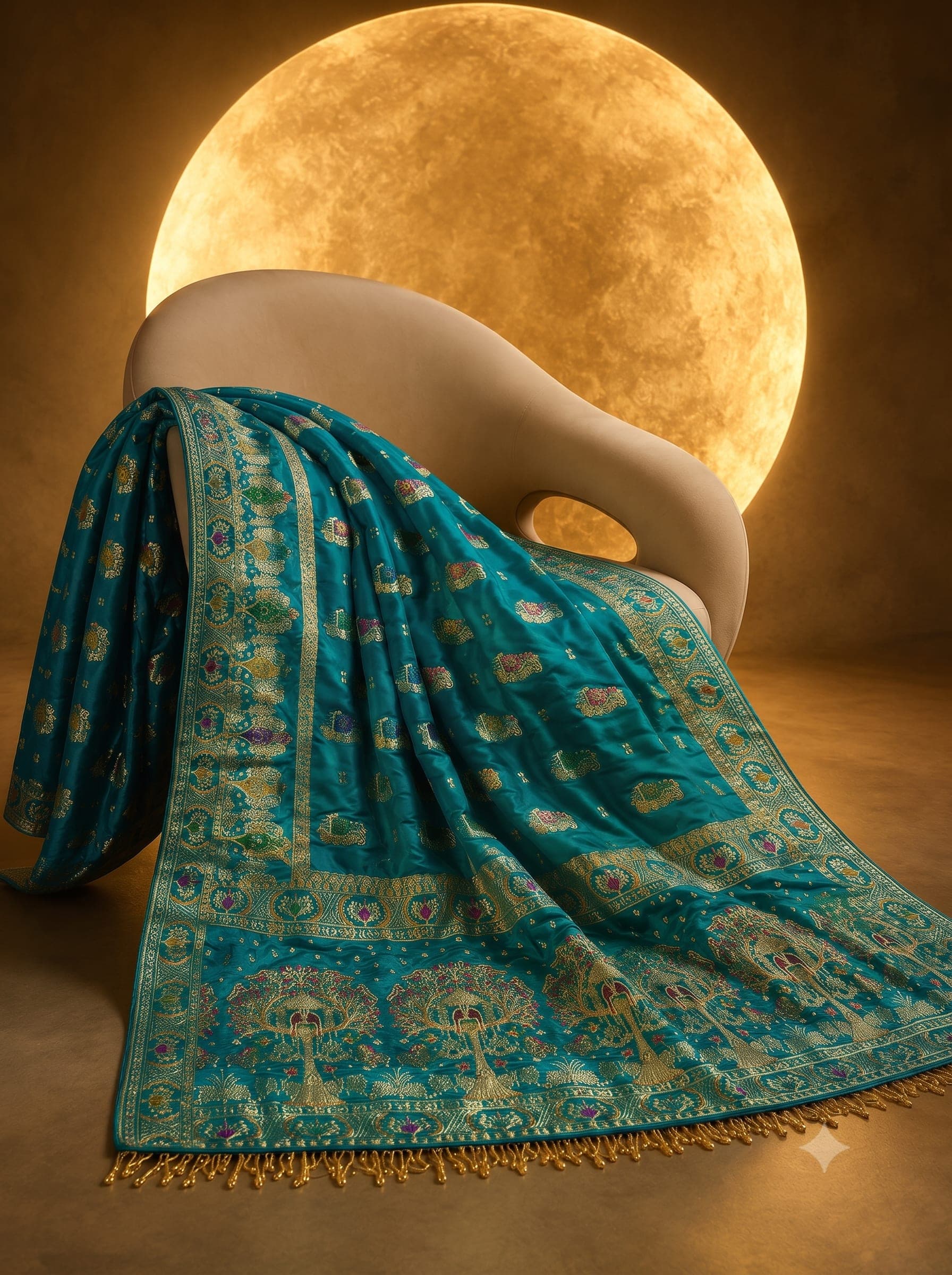

When planning a traditional Indian wedding or a grand celebration, the choice often comes down to the two undisputed queens of Indian handlooms: the Kanjeevaram from the South and the Banarasi from the North. Both are luxurious, deeply rooted in history, and incredibly beautiful. But how do they differ?
Origin and Weaving Geography
**Kanjeevaram (Kanchipuram):** Originates from the town of Kanchipuram in Tamil Nadu. The weave is deeply intertwined with the region's temple architecture and Dravidian heritage.
**Banarasi:** Woven in the ancient city of Varanasi (Banaras) in Uttar Pradesh, drawing heavy influence from Mughal artistry and Persian textile traditions.
Fabric and Texture
**Kanjeevaram:** Made using pure mulberry silk thread from South India and zari from Gujarat. The silk threads are dipped in rice water and sun-dried before use, which increases both their thickness and stiffness. This results in a fabric that is slightly heavier, extremely durable, and holds its pleats beautifully.
**Banarasi:** Traditionally woven using pure Katan silk. The texture is softer, smoother, and more malleable compared to Kanjeevaram. The heavy zari brocade provides the saree its weight, rather than the silk itself.
Motifs and Design Language
**Kanjeevaram Design:** Heavily influenced by temple architecture. You will frequently see the 'Temple Border' (triangular motifs), mythical creatures like the 'Yali', checks, stripes, and floral buttas (paisleys). Kanjeevarams are renowned for their 'Korvai' technique, where a solid border is interlocked with the main body, often creating stark, brilliant color contrasts.
**Banarasi Design:** Defined by intricate, continuous floral patterns. Key motifs include the 'Kalga' and 'Bel', intricate 'Jaal' (lattice/net patterns), and Persian-inspired flora and fauna. The aesthetic is extremely ornate, resembling intricate tapestry.