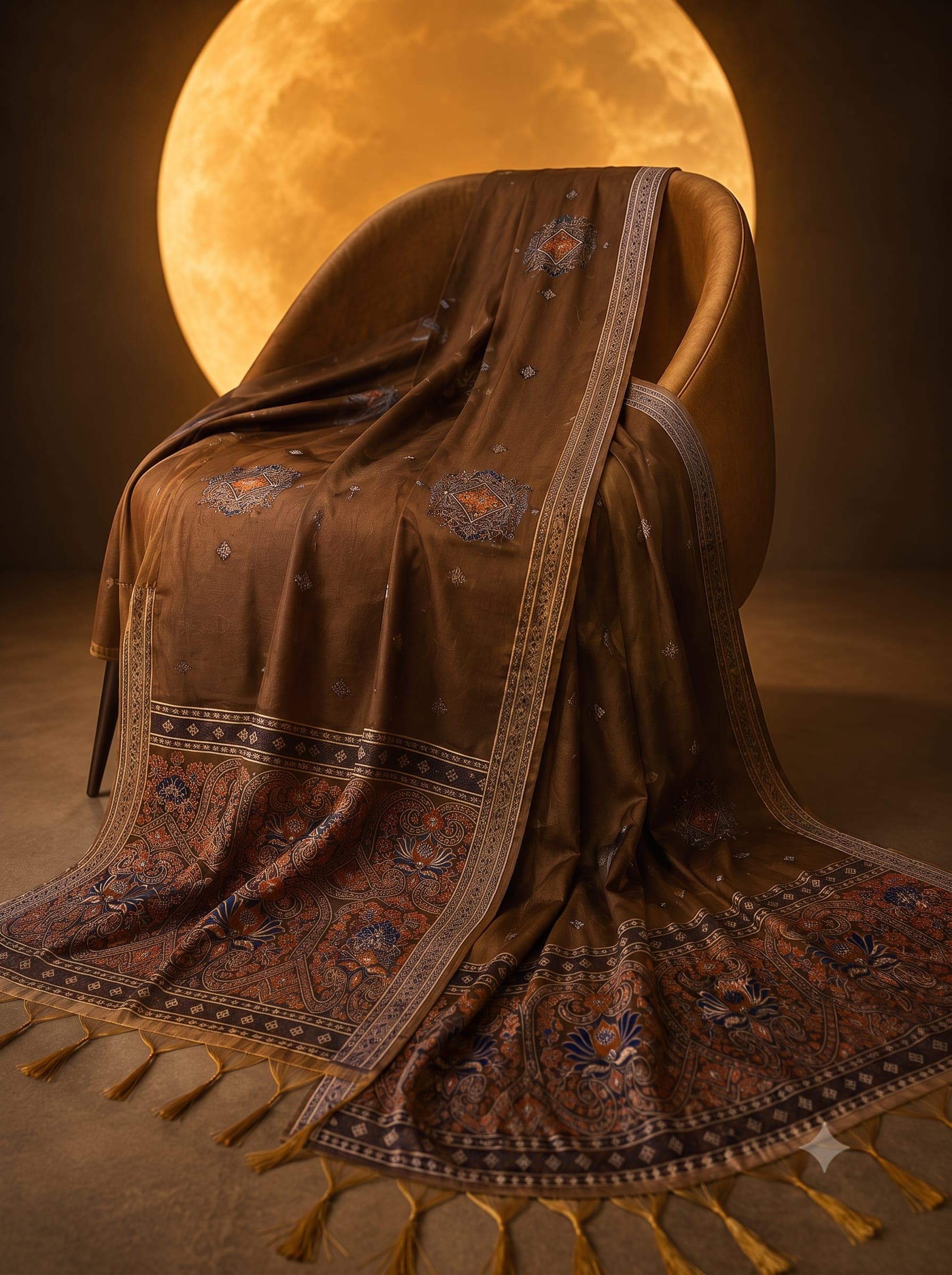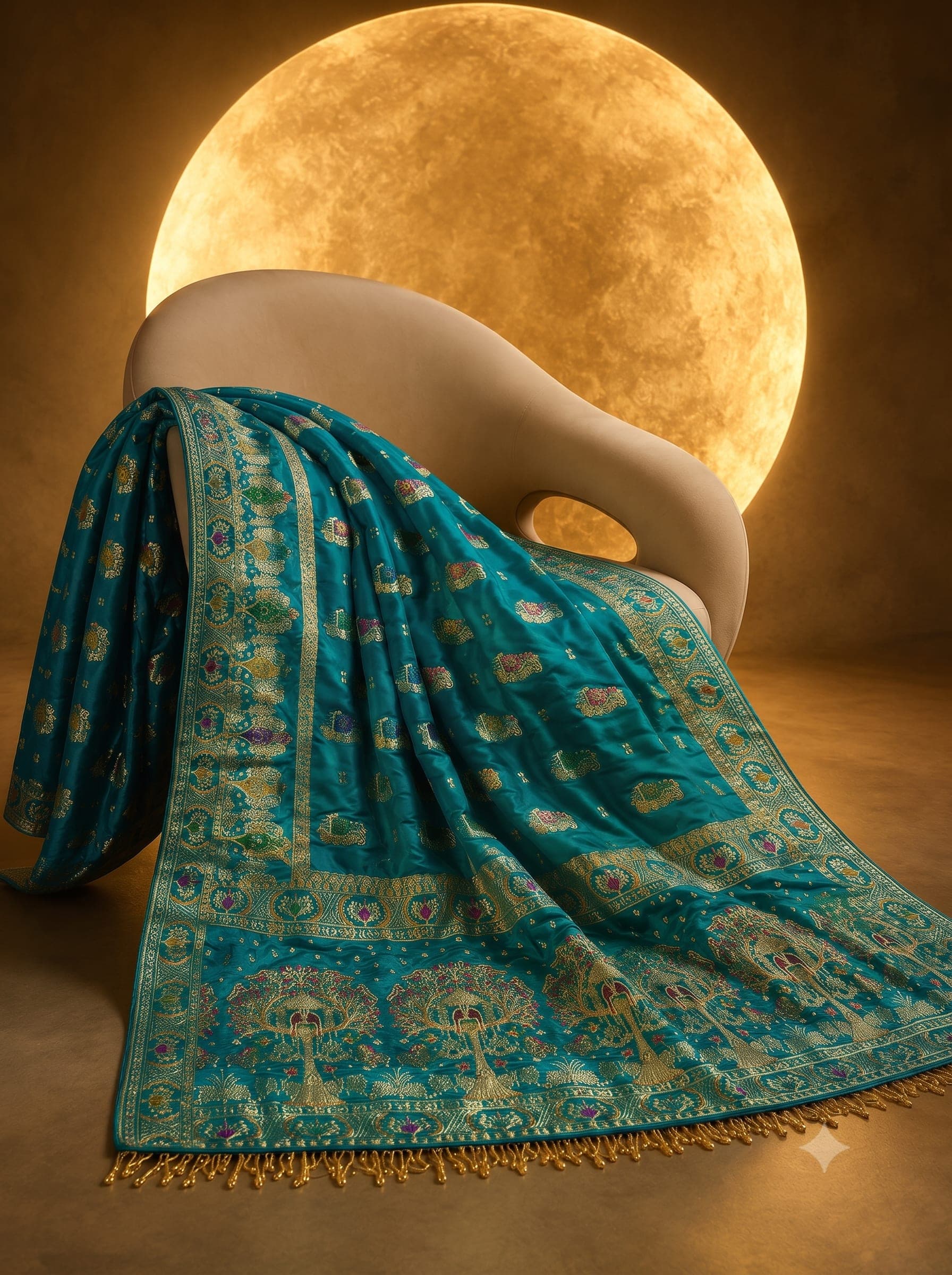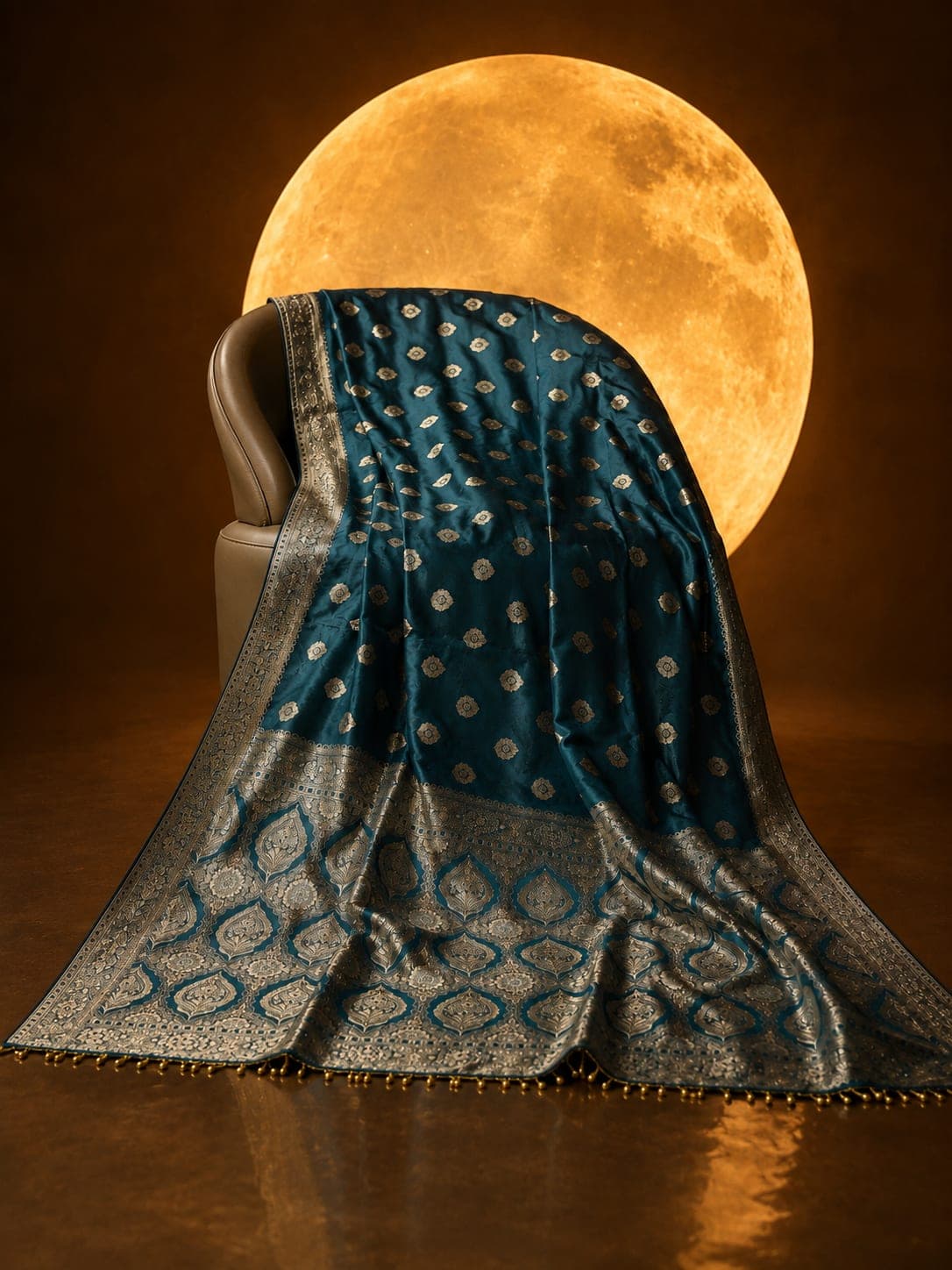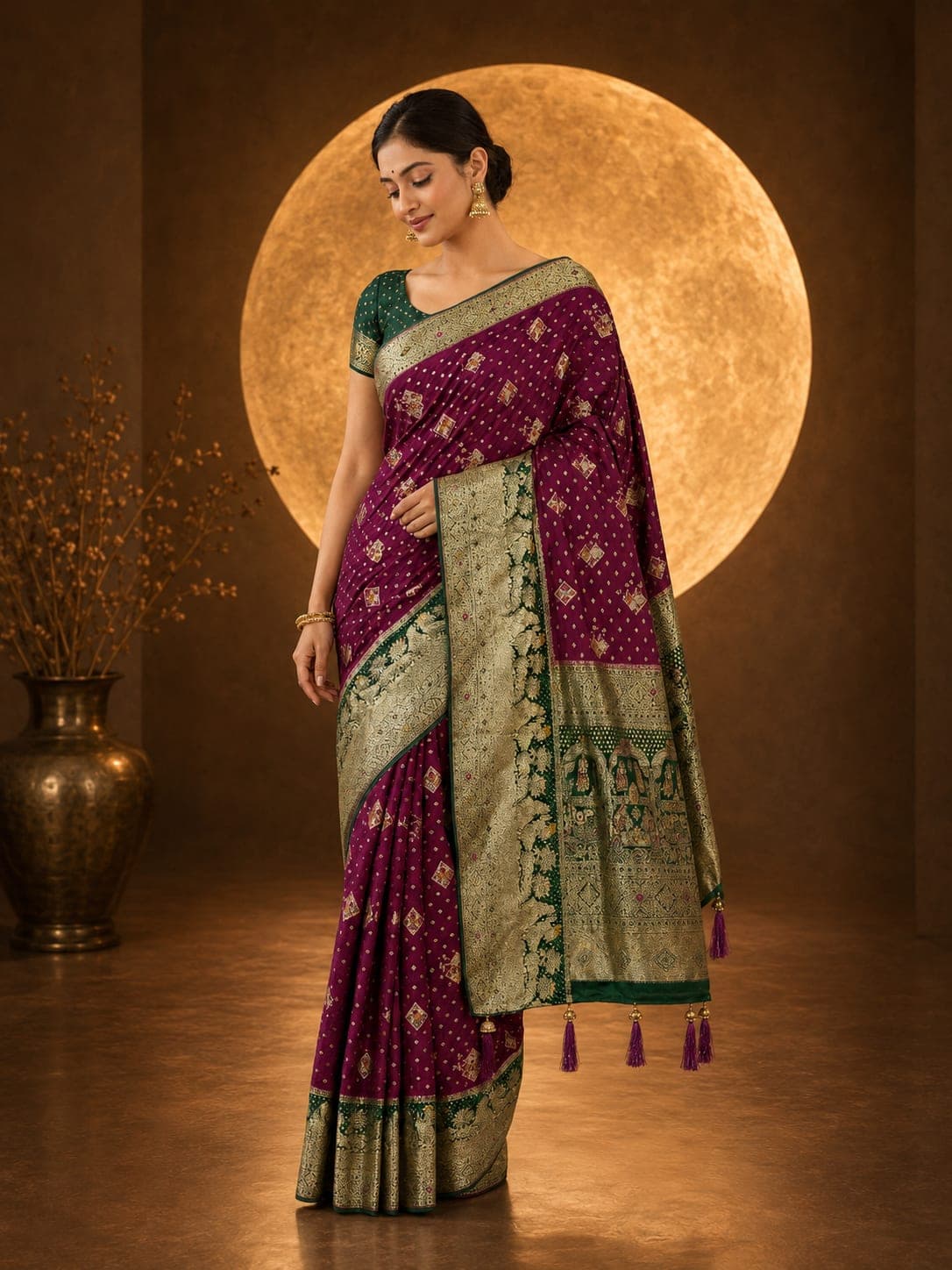
Patola sarees are among the most revered and technically complex textiles in the world. Originating from Patan, a historic town in northern Gujarat, the Patola weaving tradition spans over 900 years, closely guarded by the Salvi community of master weavers.
What Makes Patola Unique
The defining characteristic of a Patola saree is its **double ikat** weaving technique. Unlike most printed or single-ikat fabrics, in double ikat, **both the warp (vertical) and weft (horizontal) threads are individually resist-dyed** before being woven together on a loom. The weaver must align every single thread with precision — a single misalignment of even 1mm can distort the entire pattern.
This extraordinary technique means a genuine Patan Patola saree is **fully reversible** — the pattern appears identical on both sides of the fabric, with no "right" or "wrong" side.
Patan Patola vs Rajkot Patola
It is important to understand the distinction between these two types:
**Patan Patola (Double Ikat):** - Woven exclusively in Patan, Gujarat, by the Salvi family - True double ikat — both warp and weft threads pre-dyed - Takes 4–6 months for two master weavers to complete one saree - Price range: ₹1,00,000 to ₹25,00,000+ - GI-tagged (Geographical Indication) textile - Uses pure mulberry silk
**Rajkot Patola (Single Ikat):** - Woven in Rajkot and surrounding areas of Saurashtra, Gujarat - Single ikat — only warp threads are pre-dyed; weft is plain - Much faster to produce (days to weeks) - Price range: ₹3,000 to ₹30,000 - Visually similar patterns but not fully reversible - Available in silk and art-silk variants
Traditional Patola Motifs
- **Vohra Gaji Bhat** — flower motifs arranged in geometric grids - **Nari Kunjar Bhat** — dancing figures and elephants - **Chhabdi Bhat** — basket-weave pattern - **Paan Bhat** — pipal leaf motifs - **Fulvadi Bhat** — floral compositions
How to Identify Quality
1. Check reversibility — a genuine double ikat Patola looks identical on both sides 2. Feel the silk — pure Patola silk has a distinctive crisp yet smooth hand-feel 3. Inspect the edges — authentic handloom Patola have slightly irregular selvedges 4. Ask for a GI certificate for Patan Patola purchases above ₹50,000