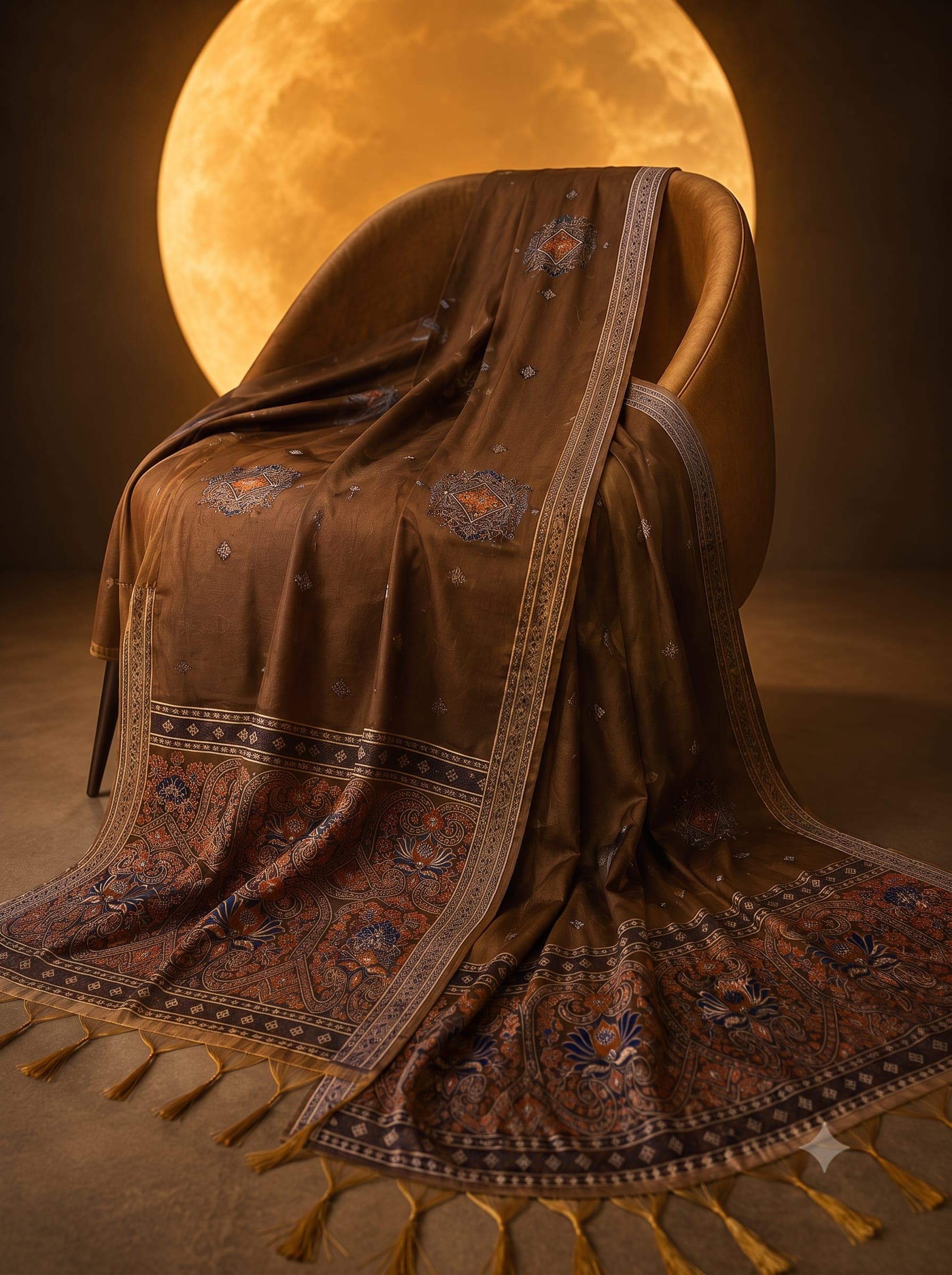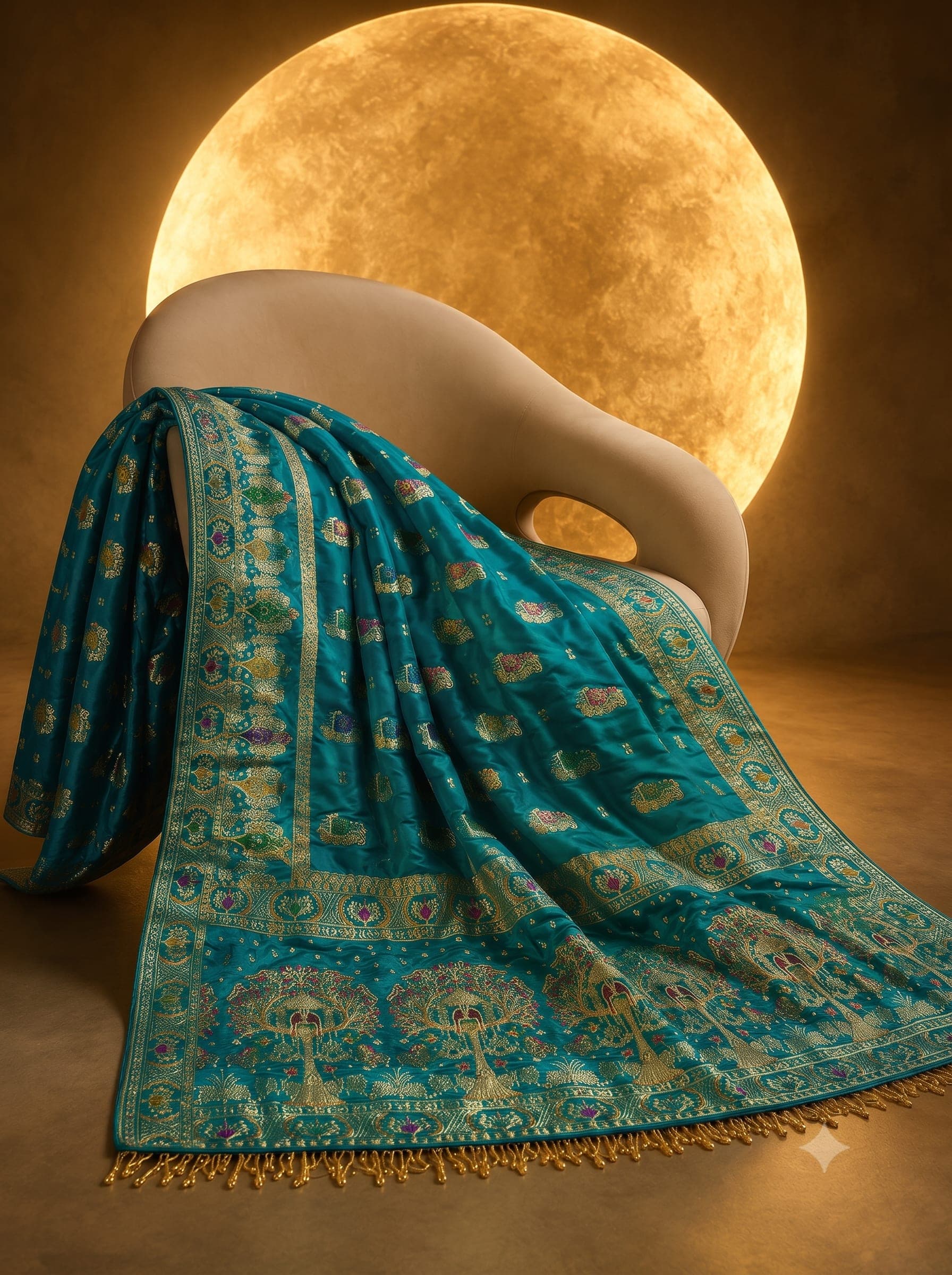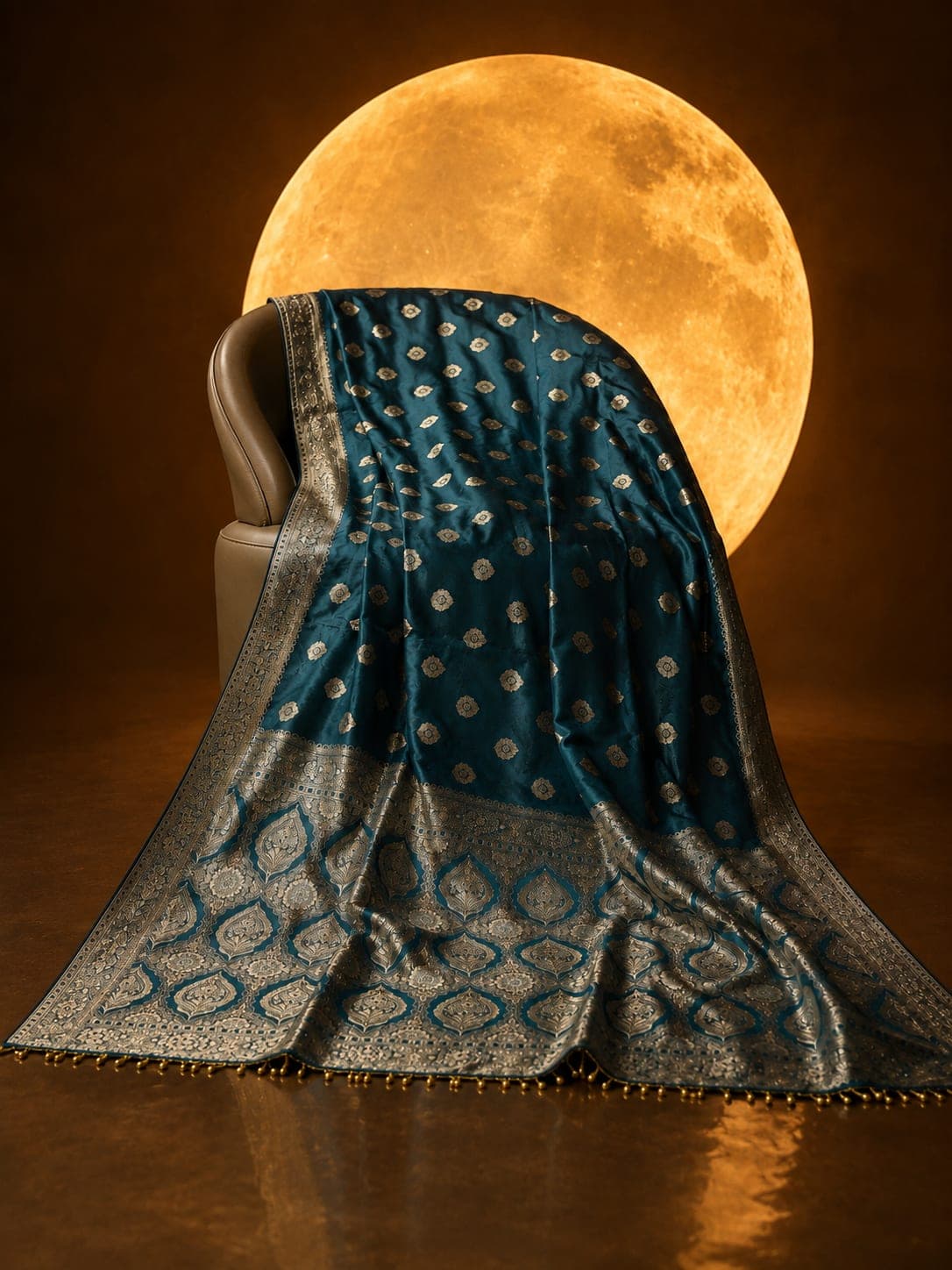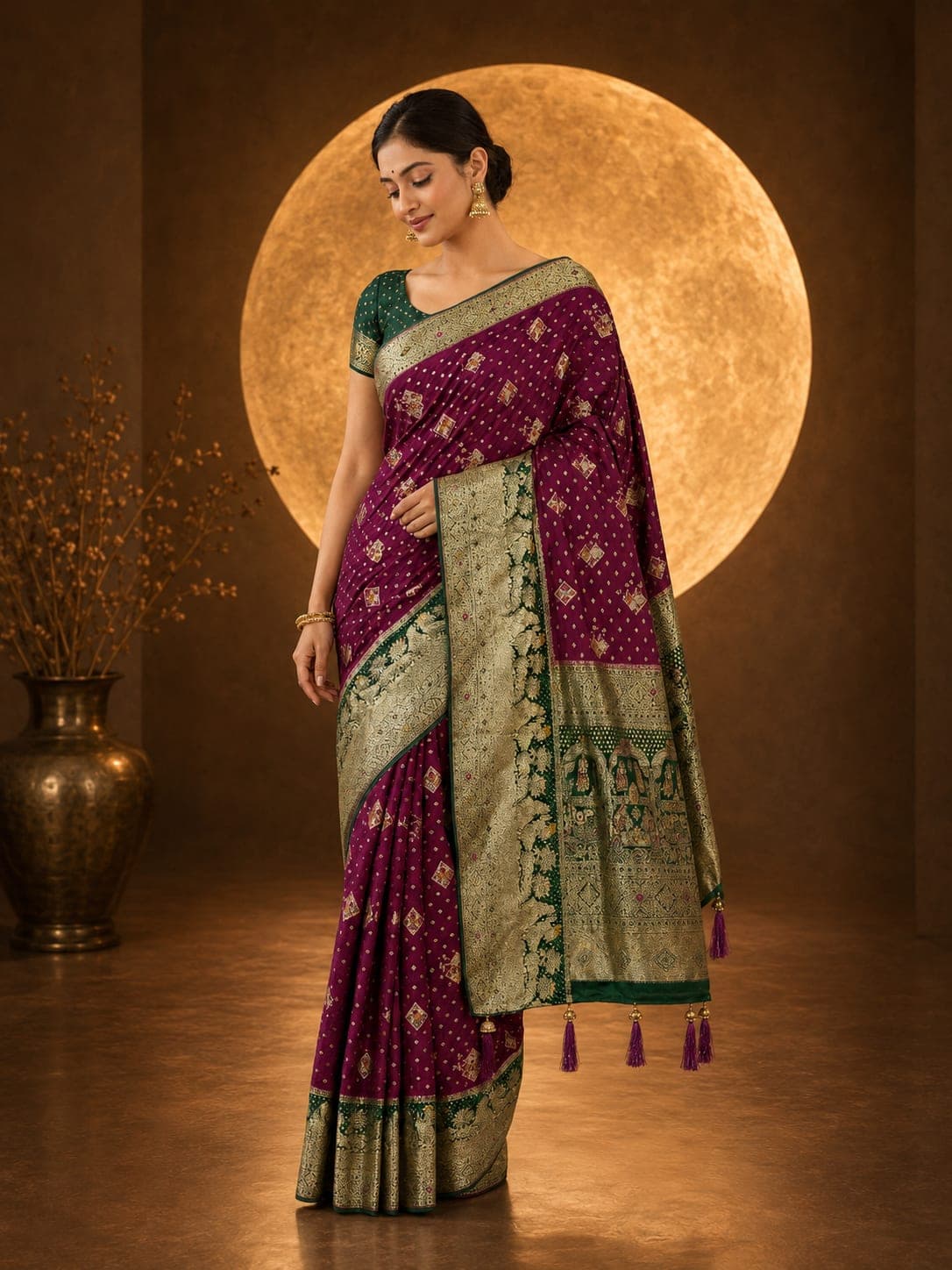
Tussar silk — also called **Kosa silk** or **Tussah** — is a wild silk harvested from the cocoons of the Antheraea moth family. Unlike cultivated mulberry silk (which comes from domesticated Bombyx mori silkworms fed mulberry leaves), Tussar silkworms feed on trees like Arjun, Sal, and Asan in the forests of **Jharkhand, Chhattisgarh, Bihar, and West Bengal**.
What Makes Tussar Unique
- **Natural golden-beige colour** — unlike the white of mulberry silk, Tussar has an inherent warm, honeyed tone - **Textured surface** — a slightly coarse, nubbly hand-feel that gives it organic character - **Eco-friendly** — often harvested after the moth exits the cocoon (non-violent silk) - **Light to medium weight** — breathable and comfortable for Indian climate - **Takes block prints beautifully** — the textured surface creates stunning printed sarees
Types of Indian Wild Silks
| Silk | Source | Region | Characteristics | |------|--------|--------|-----------------| | Tussar (Kosa) | Antheraea mylitta | Jharkhand, Bihar | Golden, textured | | Muga | Antheraea assamensis | Assam | Deep gold, durable | | Eri (Ahimsa silk) | Samia ricini | Assam, Meghalaya | Cream, woolly texture |