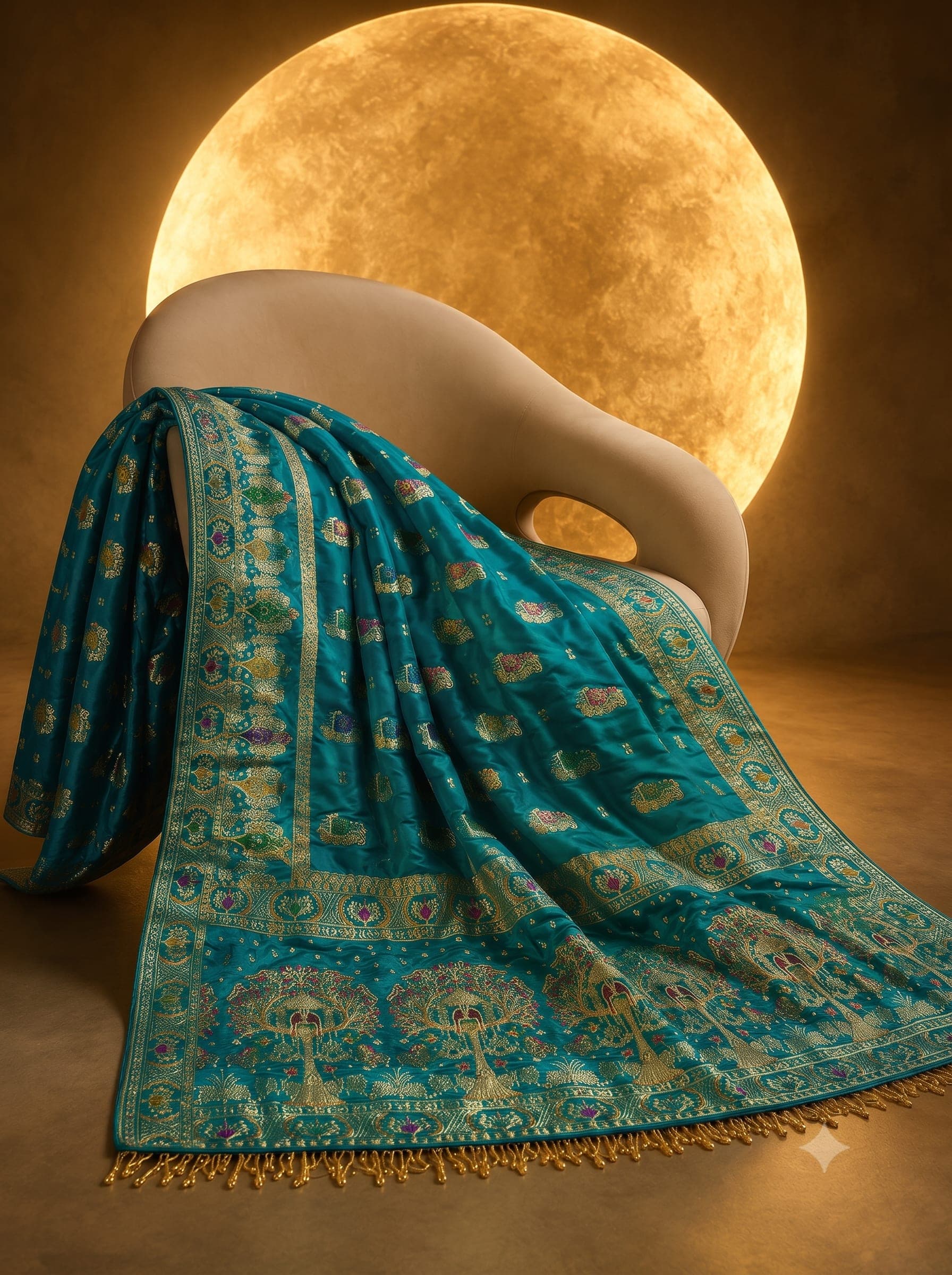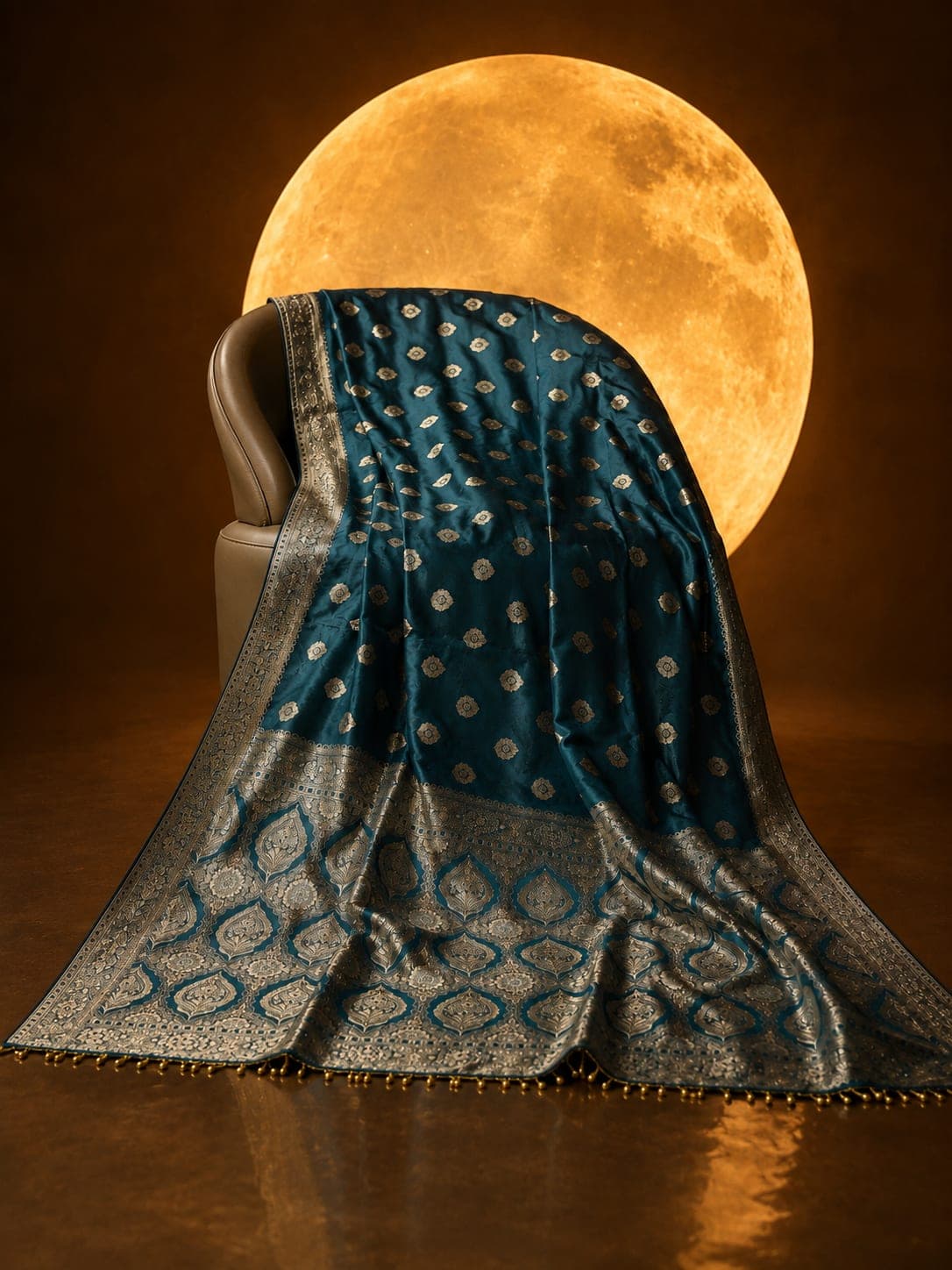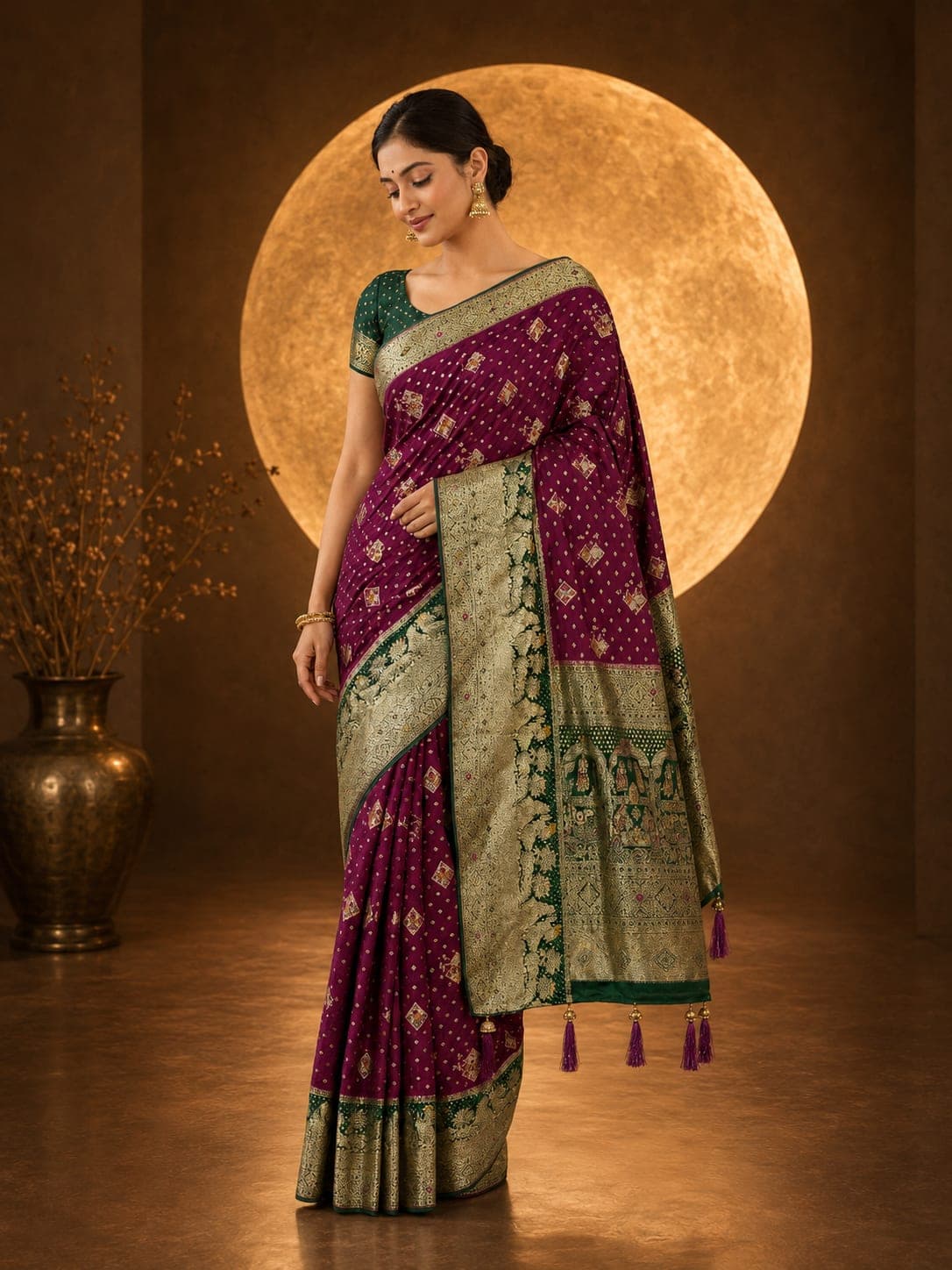

Zari is the defining element of premium Indian occasion wear. It is the metallic thread that adds the characteristic gleam, weight, and grandeur to sarees like Banarasis, Kanjeevarams, and Paithanis. Understanding zari is crucial for appreciating the value and craftsmanship of a handloom saree.
The Three Tiers of Zari
Not all zari is created equal. The material composition of the metallic thread dictates the saree's price, weight, and longevity.
1. Pure Zari (Asal Zari) The traditional, historical method. A core wire of pure silver is flattened, wrapped around a silk core yarn, and then electroplated with pure gold. Pure zari sarees are incredibly valuable, often functioning as wearable investments. They never lose their luster and age beautifully into heirlooms.
2. Tested Zari (Half-Fine Zari) The standard for premium, high-quality modern handlooms. Instead of a silver core, a copper wire is flattened, wrapped around silk, electroplated with silver, and then given a light gold wash or chemical gilding. To the naked eye, tested zari looks identical to pure zari. It is highly durable and retains its shine for decades if maintained properly.
3. Imitation Zari (Powder Zari) Used in budget and mass-produced sarees. A synthetic yarn (like polyester) is wrapped with a plastic or metallic film that has been powder-coated to look like gold or silver. It is lightweight and affordable but will turn black or dull rapidly when exposed to sweat or humidity.
Caring for Zari
Metallic threads, regardless of their purity, require specific care to prevent oxidation (darkening).
Frequently Asked Questions
How do I test if my saree has pure zari?
A: The most definitive test involves taking a tiny strand of the zari and scraping it or burning it. Pure zari will leave a red ash (the silk core) and genuine metal residue, while imitation will melt like plastic. However, we do not recommend burning your heirloom sarees! Rely on trusted weavers and requested certifications (like Silk Mark) instead.
Why has the zari on my saree turned black?
A: Oxidation. When the copper or silver elements in the zari react with moisture, perfumes, sweat, or the chemicals in naphthalene balls, the metal tarnishes. This happens most rapidly with imitation zari, but even tested zari can oxidize if stored incorrectly.
Can blackened zari be restored?
A: Severe oxidation is difficult to reverse at home. However, professional dry cleaners who specialize in heritage textiles often have chemical polishing treatments that can restore some of the lost luster.